
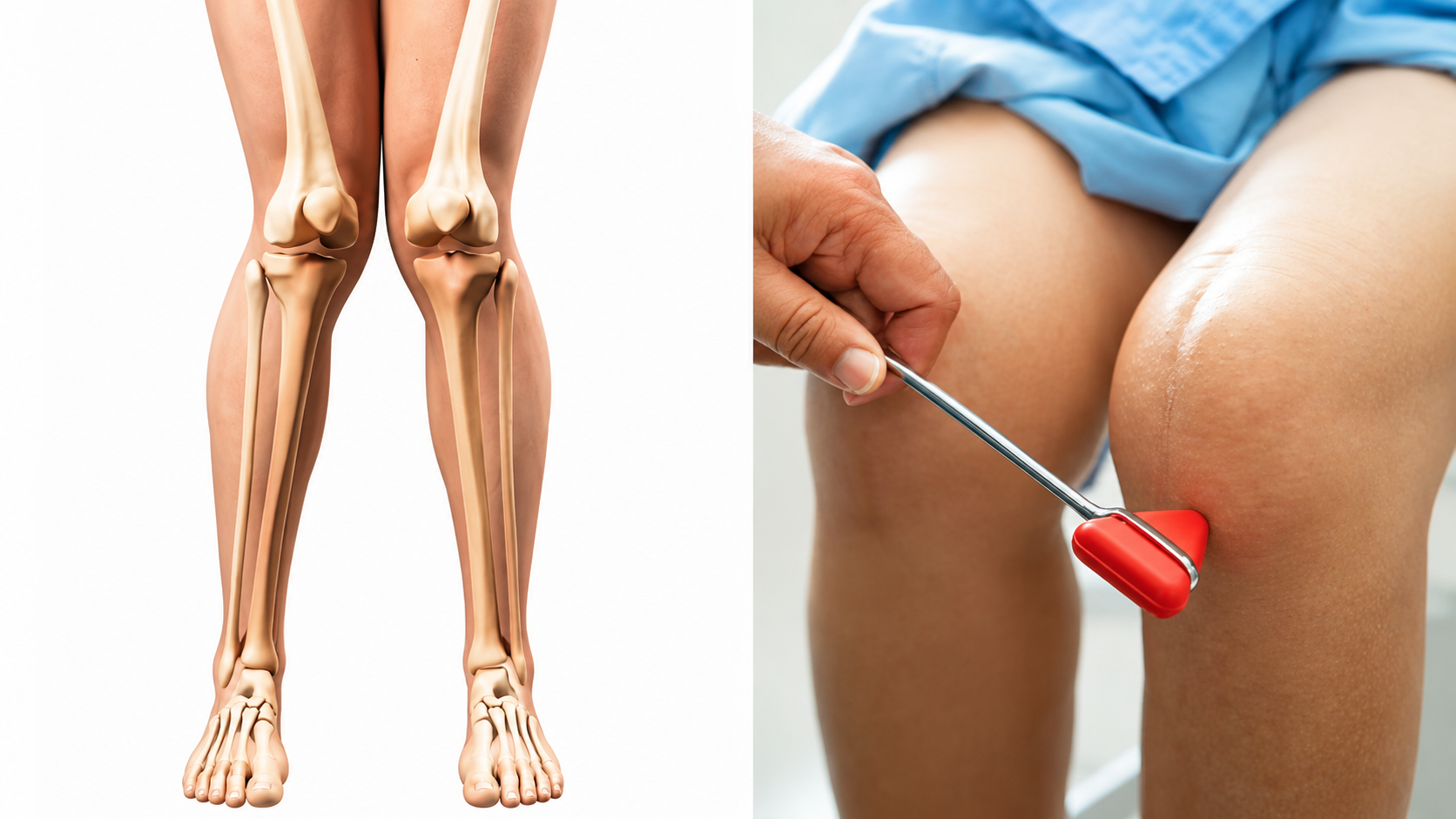
The hallway of their home in Wakad felt like a runway for two-year-old Ishaan, but for Anjali, watching him walk had become a source of silent anxiety. Every time he picked up speed, his knees seemed to “brush” against each other, causing him to trip over his own feet. She remembered her mother saying children are naturally clumsy, but as the months passed, the inward tilt of his knees appeared more pronounced.
The suspense of his development began to cloud her joy. “Is his skeleton growing crooked?” “Will he be teased at school for the way he runs?” The fear that she was missing a critical window for correction kept her searching for answers. She needed to know if this was a beautiful part of natural growth or a sign that her son’s legs needed professional guidance at Orange Health Care (OHC).
The Science of Growth: Understanding the “Normal” Curve
In the world of paediatric orthopaedics, legs are rarely straight from birth. Most infants are born “bow-legged” due to their folded position in the womb. As they begin to walk, the legs typically straighten, but by age three or four, many children develop Genu Valgum or Knock Knees. This is often a natural part of the musculoskeletal system’s development as it searches for the most stable alignment for a growing body.
However, the “science” of growth dictates that this inward tilt should gradually resolve by the time a child reaches age seven or eight. The key for parents is to distinguish between “physiologic” (normal) growth and “pathologic” (concerning) alignment. Because a child’s bones possess a high degree of plasticity, catching a persistent tilt early allows specialists to use the body’s natural growth to guide the limbs into a healthy position without invasive surgery.
A Note for Expectant Mothers: Prenatal Blueprints for Movement
The foundation for your child’s future gait is laid long before their first steps at our 24×7 clinic. While Knock Knees often appear later in childhood, the structural integrity of the bones begins with maternal health. At Orange Health Care, we emphasize that adequate Calcium and Vitamin D intake during pregnancy provides the essential building blocks for your baby’s skeleton.
Expectant mothers should also be aware that regular prenatal monitoring ensures the baby has the best environment for limb development. Following a baseline orthopaedic check can identify any congenital predispositions that might affect how a child’s legs align as they grow. Early awareness ensures that when your toddler hits the “Knock Knee” stage, you have a professional team ready to monitor the transition.
The Resolution: Straightening the Path to Play
Anjali’s decision to visit Orange Health Care provided the peace of mind she desperately needed. Through a detailed gait analysis and consultation with Dr. Rajeev Nirawane, she learned that Ishaan’s “clumsy” phase was currently within the normal range of development, but required consistent monitoring to ensure it didn’t progress. The suspense that had once made her dread his walks was replaced by the confidence of having an expert plan. Today, Ishaan runs with the same “thump-thump” as his peers, his future no longer shadowed by the fear of the unknown.
When to Seek Observation: Pediatric Services at OHC
While many cases of Knock Knees resolve on their own, the following “red flags” indicate that a child should be evaluated by our specialized team:
- Asymmetrical Tilt: One knee tilts inward significantly more than the other, or only one side is affected.
- Persistent Gap: The ankles remain more than 8 cm (about 3 inches) apart when the knees are touching after age seven.
- Functional Limitations: The child trips frequently, experiences knee or hip pain, or has difficulty keeping up with peers during play.
- Excessive Height/Weight Discrepancy: Rapid growth spurts or heavy physical load that seems to worsen the inward tilt.
- Minimally Invasive Guided Growth: For persistent cases, OHC offers “keyhole” procedures that use tiny plates to gently straighten the legs as the child grows.
- Comprehensive Gait Analysis: Using top-rated clinical setups to track how your child’s alignment changes over time.
For expert paediatric orthopaedic care, families can visit Orange Healthcare
Address: 110, Khinvasara Trade Center, Datta Mandir Road, Mangal Nagar, Thergaon, Pimpri-Chinchwad, Maharashtra 411033
Mobile no.: +91 7888038037
Email:
[email protected]
Explore Our Specialized Services: